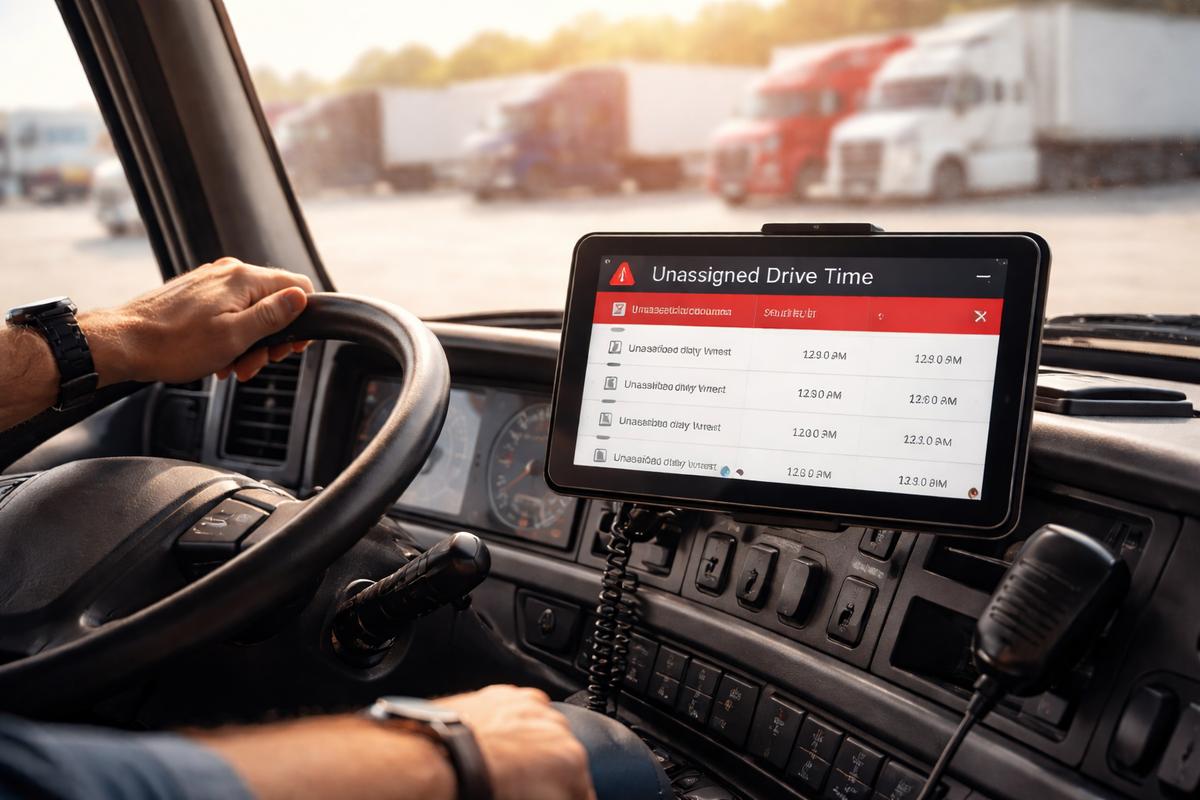
What is unassigned drive time?
Unassigned drive time refers to vehicle movement that is not assigned to any driver in the ELD system.
This happens when:
- a vehicle moves without a driver logged in
- the ELD device disconnects or temporarily loses connection
- a driver forgets to log in before driving
Even a few minutes of unassigned movement is recorded and can be flagged during an inspection.
Why DOT takes it seriously
For DOT officers, unassigned miles are not just a technical error. They may indicate deeper issues such as:
- lack of driver accountability
- possible HOS manipulation
- weak fleet management processes
Accumulated unassigned miles increase the risk of fines, lower CSA scores, and trigger additional audits.
Common january causes
Unassigned drive time tends to spike in January due to:
- post-holiday driver turnover
- new drivers unfamiliar with ELD systems
- device replacements or updates
- missed or delayed event assignments
Without clear procedures, even well-managed fleets can develop recurring violations.
How Unity ELD prevents violations
Unity ELD helps fleets reduce unassigned drive time by providing:
- automatic alerts for unassigned driving events
- quick and easy driver reassignment tools
- full event history for transparency and audits
Fleets always know what happened, when it happened, and why - without guesswork or manual logs.
Conclusion
Five minutes spent resolving unassigned drive time can save thousands of dollars in fines and protect a fleet’s reputation.
Compliance starts with visibility - and that’s exactly what Unity ELD delivers.