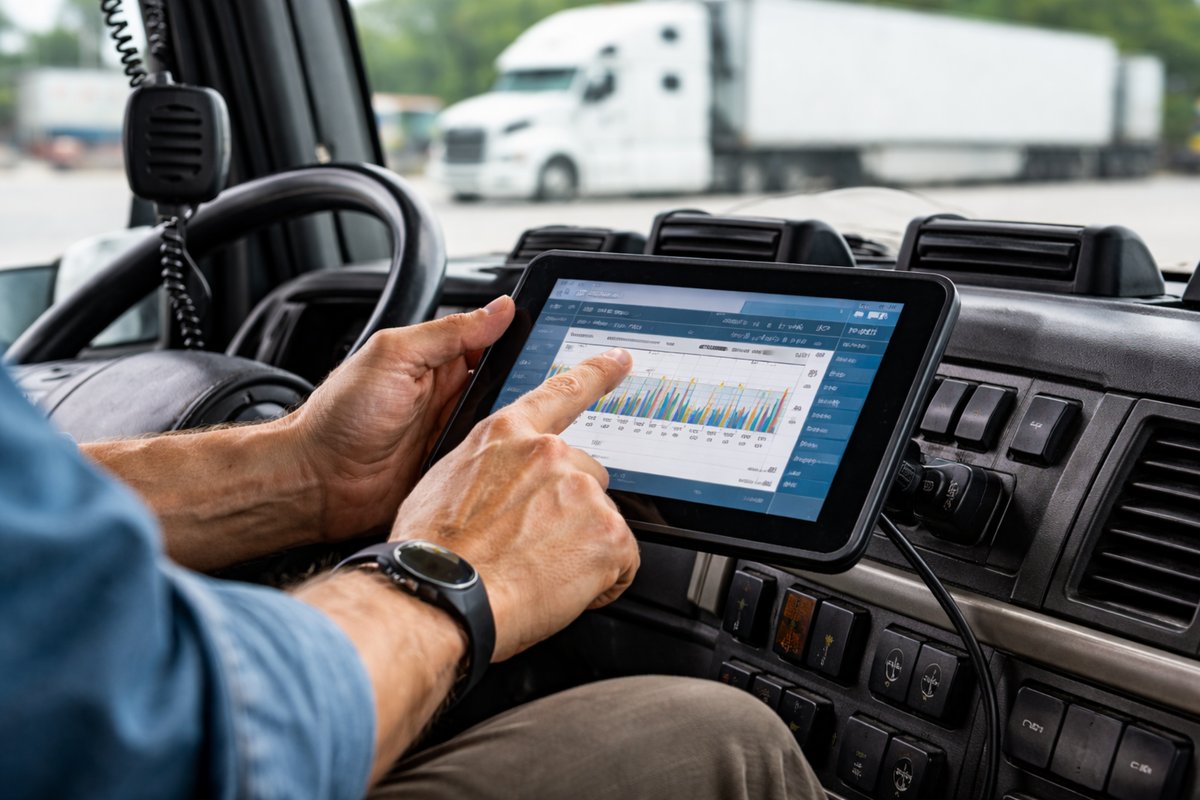
Key benefits of ELDs in reducing violations
Automatic data recording
ELDs connect directly to the vehicle’s engine control module and automatically record:
- Driving time
- Engine hours
- Vehicle movement
- Miles driven
- Duty status changes
This eliminates manual log errors and reduces the risk of falsification, which used to be a common source of violations with paper logs.
Significant reduction in HOS violations
Studies show that vehicles equipped with ELDs experience:
- Up to 53% fewer Hours of Service violations
- Nearly 49% fewer overall log-related violations
Automation increases transparency and ensures drivers stay within legal limits.
Faster and easier roadside inspections
ELDs generate standardized electronic reports that can be quickly transferred to inspectors during roadside checks.
This reduces paperwork issues, prevents incomplete logs, and minimizes the likelihood of inspection-related penalties.
Improved safety and reduced fatigue
Because ELDs strictly track driving hours, they help prevent driver fatigue — one of the leading causes of truck-related accidents.
Better compliance leads to safer roads and fewer liability risks for carriers.
Why violations still happen
Even with ELDs, violations can occur due to:
- Unassigned driving time
- Failure to certify logs daily
- Using non-registered devices
- Malfunction documentation errors
- Inability to transfer data during inspection
Technology alone is not enough — proper usage and procedures are critical.
Practical strategies to reduce ELD violations
1. Driver Training
Ensure drivers understand:
- How to correctly operate the ELD
- How to certify logs daily
- How to transfer data during inspections
- What to do in case of malfunctions
2. Internal log audits
Regularly review logs before DOT inspections to identify and correct errors early.
3. Maintain device compliance
Make sure:
- The ELD is FMCSA registered
- Software is updated
- Malfunctions are documented properly
- Backup procedures are in place
4. Clear company policies
Establish internal compliance procedures covering:
- Log corrections
- Handling unassigned driving time
- Roadside inspection protocols
5. Use ELD data proactively
Analyze ELD reports to:
- Identify risky driving behavior
- Improve scheduling
- Prevent HOS violations before they occur
Electronic Logging Devices are one of the most effective tools for reducing compliance violations in the trucking industry.
However, the true impact comes when technology is combined with proper driver training, internal auditing, and clear operational procedures.
When implemented correctly, ELD systems reduce fines, lower safety risks, improve CSA scores, and help carriers operate more efficiently.